
Cooking With Sugar: Interfering Agents Explained
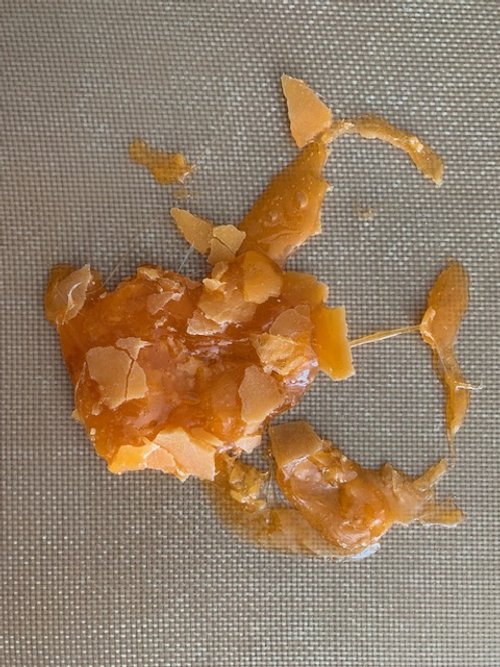
Oops - This is what a crystallized hot mess looks like
Ah, candy making. Everything’s going great- you’re boiling syrup, envisioning silky caramels and then suddenly your sugar is crystallizing into a sad, gritty mess. What happened? Who hurt you, sugar?
Spoiler alert: Interfering agents could have helped.
What Is an Interfering Agent?
Sounds dramatic, right? Like a spy sneaking into the pot to mess up enemy plans. And that’s kind of what it is.
In candy making, an interfering agent is an ingredient you add specifically to stop sugar crystals from forming. Because when sugar melts, it will do anything to become a crystal again. An interfering agent interferes with the crystallization process.
What Happens
I’ll say it again: sugar is a crystal and will do anything to go back to its original state. Sugar is made up of two molecules: fructose and glucose. When you melt sugar, the fructose and glucose split apart creating a smooth consistency, perfect for candies. The problem is, those molecules will find ANY reason to join back together, and when that happens, it turns back to a crystal state. Usually this happens if: an unmelted sugar crystal is introduced to the mix after the sugar has melted, or, the sugar mixture is agitated too much (over stirring). This is why in candy making it is often stressed over and over to use clean tools and to stop stirring when sugar is boiling.
An interfering agent gets in between those melted glucose and fructose molecules and says - nope, you aren’t getting back together today! It acts like a barrier (or, interferes) to keep the sugar molecules separate and smooth.
Interfering Agents
1. Corn Syrup:
Corn syrup is like that friend who can diffuse drama at a party. It contains glucose, which doesn't crystallize as easily as sucrose (a.k.a. granulated sugar). It sneaks into the sugar structure and says, “Hey, let’s just chill.” The result is no crystals.
Use it in: caramels, nougat, marshmallows- basically anything that’s supposed to be smooth, not grainy.
2. Cream of Tartar:
Cream of tartar is the stealthy acid that breaks sugar molecules apart like a tiny molecular divorce lawyer.
Use it in: fondant, fudge, and sometimes hard candies.
3. Butter:
Butter does two things. One, it adds fat that coats the sugar crystals and physically gets in their way (like a bouncer at a VIP club). Two, it adds richness and makes everything taste better, which isn’t scientifically required but is of course, delicious.
Use it in: toffee, brittle, pralines—basically anywhere you want flavor and smoothness.
4. Honey:
Honey is mostly glucose and fructose, so it naturally prevents crystallization. Plus, it brings its own mellow, floral notes to candy.
Use it in: chewy candies, caramels, or just to make your recipe sound rustic and wholesome.
5. Lemon Juice or Vinegar:
They’re acids like cream of tartar, breaking down sucrose into its friendlier components. Great in small doses- unless you want your candy to taste like salad dressing, in which case, live your truth.
Use It Or Beware!
Without interfering agents, candy making would be one long exercise in heartbreak. So next time you’re standing over a bubbling pot of sugar, remember: add an interfering agent, and you too can help prevent a sugar meltdown (although sometimes it happens anyways!)
Now go forth, and make candy that melts in your mouth- not your patience.
Here are some more candy making tips and tricks:

Hey, I’m Kim!
After a lot of practice (and a few sticky disasters), I’ve crafted a delicious selection of lollies and mastered a ton of candy making tips to share with you—lump free. (You’re welcome.)

Ok, I know they don’t really look that different than the rice crispy squares we know and love, but hear me out! The proof is in the taste. I’ve scratch made the marshmallows and amped up the flavour with browned butter, vanilla and of course, salt to make a very bougie version of a rice crispy square.
If you are looking for something just a bit different (and extra), give this one a try!